The Foot Soldier's Son Who Conquered Japan — Toyotomi Hideyoshi and the Greatest Upset in Japanese History | Rotem Tomita & Co. ブログ | Rotem Tomita & Co.
From the top floor of Osaka Castle's main tower, you can see the city in every direction. The Umeda business district to the north, Tsūtenkaku Tower faintly visible to the south, the waters of Osaka Bay glinting to the west.
The man who built this castle came from the very bottom of society.
His name was Toyotomi Hideyoshi. No one in Japanese history lived a more dramatic life. In an era when social rank was everything, a man whose origins were completely unknown became a feudal warlord, unified the entire country, received the title of Kanpaku from the Emperor, and ruled Japan as Taikō.
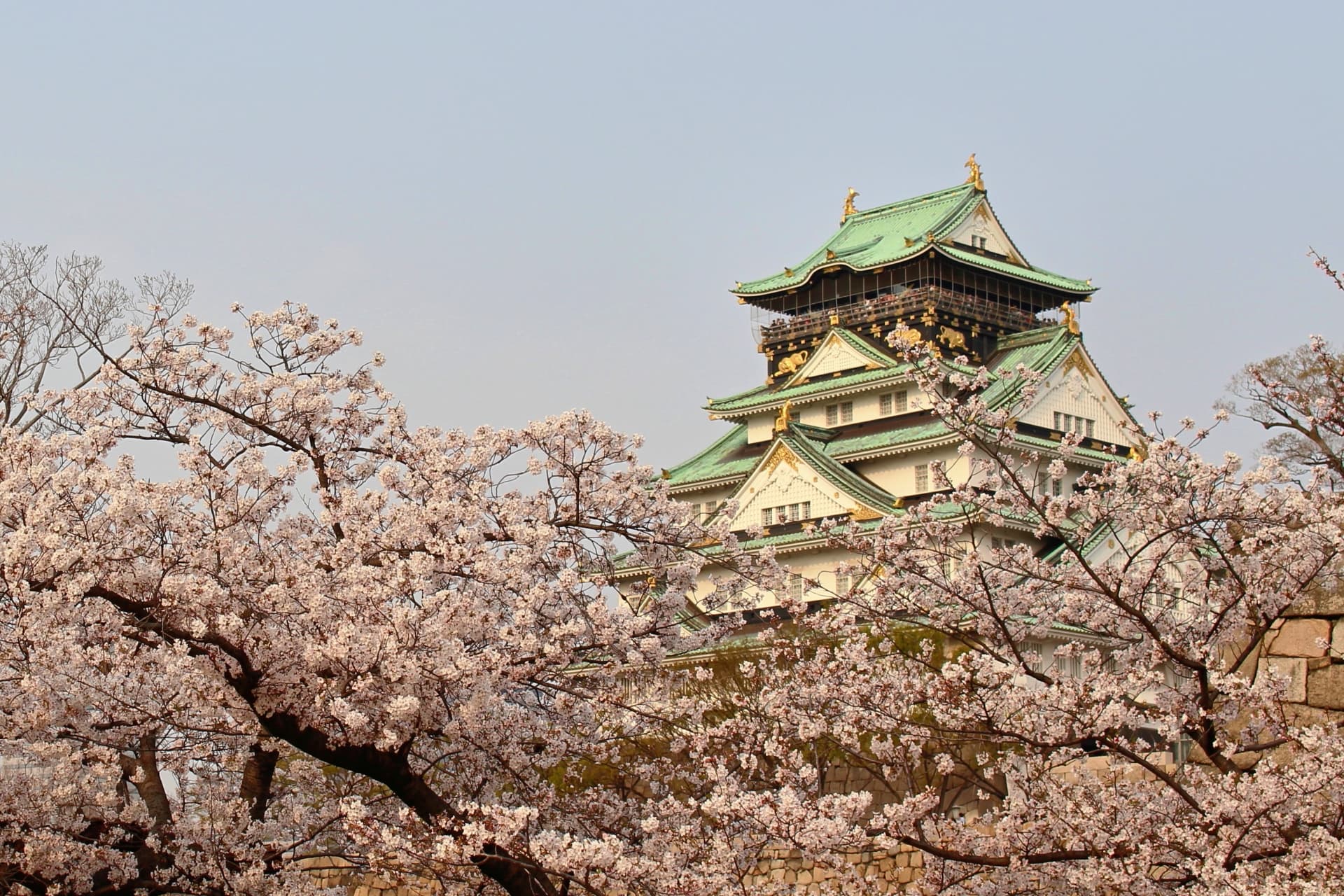
One thing to know: the Osaka Castle you see today is not the one Hideyoshi built. His castle was burned to the ground in 1615 during the Summer Siege of Osaka by the Tokugawa army. The Tokugawa Shogunate then built a new castle on top of it. That castle, too, lost its tower to a lightning strike, and the current tower was rebuilt in 1931 using reinforced concrete. In other words, three different eras of Osaka Castle are layered on this one spot.
Hideyoshi's castle lies buried underground, though parts of its stone walls have been confirmed through excavation. The visible castle isn't Hideyoshi's, but the meaning of this place — a man who transcended his station, the ambition, and the power shift that destroyed it — hasn't changed in 400 years.
From the Bottom to the Top
Origins Unknown
Hideyoshi was born around 1537 in Owari Province (modern western Aichi Prefecture). "Around" — because even his exact birth year is uncertain. His father was said to have been an ashigaru (the lowest rank of foot soldier), or possibly a farmer. His mother, later known as Ōmandokoro, had unknown origins.
After becoming the supreme ruler, Hideyoshi tried to embellish his background. But contemporary sources suggest he truly was a nobody — a man with no verifiable lineage whatsoever.
Meeting Nobunaga
Hideyoshi enters the historical record when he entered the service of Oda Nobunaga.
Nobunaga was expanding his power from Owari (modern western Aichi Prefecture) and was the warlord closest to unifying Japan. Under Nobunaga, Hideyoshi started as an errand boy and worked his way up through logistics, castle construction, and diplomatic negotiations — tackling every conceivable task.
Hideyoshi's military genius reached its peak in the Great Return of 1582 (Chūgoku Ōgaeshi). When Nobunaga was killed by Akechi Mitsuhide in the Incident at Honnōji, Hideyoshi was far away in the Chūgoku region (around modern Okayama Prefecture), facing off against the Mōri clan. Upon learning of Nobunaga's death, Hideyoshi brokered a lightning-fast peace with the Mōri, marched his entire army roughly 200 kilometers back in just eight days, and crushed Mitsuhide at the Battle of Yamazaki.
That speed decided Hideyoshi's path to supremacy. While every other powerful general was still sizing up the situation, Hideyoshi was the only one who moved. The contrast with Ieyasu — the man who waited — is stark (see "The Shogun Who Became a God").
Unifying Japan — Then Rebuilding the Class System
The Road to Supreme Power
After the Battle of Yamazaki (1582), Hideyoshi moved on both the political and military fronts to establish himself as Nobunaga's true successor. He secured legitimacy by championing Nobunaga's grandson Sambōshi as heir, then defeated Nobunaga's senior retainer Shibata Katsuie at the Battle of Shizugatake (1583).
In 1585, he was appointed Kanpaku — the highest authority in the imperial court, governing in the Emperor's name. By 1590, he had forced the Hōjō clan at Odawara to surrender, completing the unification of Japan. A foot soldier's son had brought the entire country under his control in roughly 30 years.
The Sword Hunt — A Revolutionary Who Banned Revolution
One of the things Hideyoshi did as he unified Japan was the Sword Hunt (Katanagari) of 1588.
He confiscated every sword, spear, and firearm from the peasantry. The official reason was that the collected metal would be used to build a great Buddha statue. The real purpose was obvious: to make sure farmers could never again take up arms in rebellion.
The irony runs deep. Hideyoshi himself was a man of the lowest origins who had risen to power by taking up arms. And the moment he reached the top, he kicked the ladder out behind him — making sure no one could ever do what he'd done.
The Taikō Land Survey — Ruling by Numbers
Alongside the Sword Hunt, Hideyoshi's other major undertaking was the Taikō Kenchi (land survey). He ordered every plot of farmland in the country to be measured and its yield recorded in a standardized unit called kokudaka (rice output).
Before this, land rights were a tangled mess. A single plot might involve a farmer who tilled it, a local steward (jitō) who collected taxes from it, and an aristocratic estate owner (shōen lord) who received the annual tribute — layers upon layers of competing claims. Hideyoshi wiped out all these intermediate rights. One plot, one registered cultivator. The farmer paid tribute to the local lord, and the lord served Hideyoshi according to his kokudaka. A simple, clean chain of command.
The Taikō Kenchi was the beginning of a modern land registry. The state surveyed, quantified, and managed every piece of land in the country.
Freezing Social Class — The Separation of Warriors and Farmers
The Sword Hunt and the Taikō Kenchi worked as a package to achieve one massive transformation: heinō bunri, the formal separation of warriors from farmers.
Before Hideyoshi, it wasn't unusual for farmers to pick up weapons and fight. Hideyoshi himself was the greatest success story of that system. But he fixed things in place: warriors live in the castle town, farmers stay in the village. No crossing over.
Hideyoshi rose from the bottom to become a warrior. Then he shut the door behind him. The man who pulled off the greatest upset in Japanese history made upsets structurally impossible. This laid the groundwork for the rigid class system of the Edo period that followed.
The Late-Life Catastrophe — The Invasion of Korea
You can't tell the story of Hideyoshi without addressing the Korean invasions.
In 1592 and again in 1597, Hideyoshi sent massive armies to the Korean Peninsula. The stated goal was to secure a path to conquer Ming China. The reality was a full-scale invasion involving up to 160,000 troops.
The campaigns devastated the Korean Peninsula. Japan lost enormous numbers of soldiers. In the end, they withdrew with nothing to show for it.
Why did Hideyoshi start this war? There are several theories, but the most widely accepted is that after unifying Japan, he needed somewhere to direct the military energy of samurai who no longer had domestic enemies to fight. Compare this to Ieyasu, who, as discussed earlier, drained the lords' power through the sankin-kōtai system of required attendance in Edo. Hideyoshi tried to solve the problem by expanding outward; Ieyasu solved it by tightening control inward.
Hideyoshi's Death, and the Fate of Osaka Castle
In 1598, Hideyoshi died at the age of 62 (some sources differ). What he left behind was a five-year-old son named Hideyori, and an unstable government based on a council system — the Five Great Elders and Five Commissioners — that was supposed to rule collectively.
On his deathbed, Hideyoshi reportedly pleaded over and over: "Take care of Hideyori." The bitter irony is that the head of the Five Great Elders, Tokugawa Ieyasu, was the one who would seize power (see "The Shogun Who Became a God").
Osaka Castle's fate changed after Hideyoshi's death. In the Winter Siege (1614) and Summer Siege (1615) of Osaka, the Tokugawa forces attacked. Hideyori took his own life, and the Toyotomi clan was annihilated. The grand castle Hideyoshi had built was engulfed in flames and collapsed.
Afterward, the Tokugawa Shogunate built a new Osaka Castle. They deliberately used larger stones than Hideyoshi's walls had. They physically buried Hideyoshi's traces and stacked Tokugawa authority on top.
Walking Around Osaka Castle — What to Know to Enjoy It 10x More
The Main Tower
The current tower dates from its 1931 reconstruction. Inside, it's a museum covering Hideyoshi's life and the history of Osaka Castle.
The exterior is a hybrid: the lower stories have white-plastered walls in the Tokugawa style, while the top floor features black lacquer with gold ornamentation in the Hideyoshi style. But the real draw is the view from up here. The 360-degree panorama of Osaka lets you feel why Hideyoshi chose this spot — it commands the crucial junction between Osaka Bay and the inland waterways.
The Stone Walls
The stone walls of Osaka Castle come from two different eras.
Hideyoshi-era walls have been partially revealed by excavations underway since 2013 (the Osaka Castle Toyotomi Stone Wall Public Exhibition Project). The massive walls visible above ground, however, are from the Tokugawa period. The "Octopus Stone" (Takōishi) near the Ōtemon gate has a surface area of roughly 36 tatami mats (about 59 square meters). This giant boulder served a dual purpose: it showcased the financial power of the lord who transported it, while simultaneously draining that financial power (the same logic as the Ōtemon stone walls at the Imperial Palace — see "The Void at the Heart of Tokyo").
The Moats
Osaka Castle has a double moat — an outer moat and an inner moat. The sight of stone walls reflected in the water is beautiful in every season. Cherry blossoms in spring, autumn foliage in fall.
But here's the twist. During the peace talks after the Winter Siege of Osaka (1614), Ieyasu made Hideyori agree to fill in the outer moat. Then the Tokugawa forces went further than the agreement and filled in the inner moat too. The following year, in the Summer Siege, the now-defenseless castle fell easily. The moats you see today were re-dug during the Tokugawa period.
Hōkoku Shrine
Inside the Osaka Castle grounds, this shrine is dedicated to Hideyoshi. Here, he is enshrined as the deity Toyokuni Daimyōjin.
What's fascinating is that the Tokugawa Shogunate stripped Hideyoshi of his divine title, banned repairs to the shrine, and left it to decay. They refused to acknowledge the loser even as a god. The shrine was only restored after the Meiji Restoration. Another instance of a pattern in Japanese history: every time power changes hands, the previous ruler's memory gets rewritten.
Closing — The Legacy of a Man Who Was Nobody
Hideyoshi's life is a story of hope — that talent and effort can shatter the walls of social class. It's also a story of irony — because the man who broke through those walls made them stronger.
Hideyoshi's stone walls lie buried beneath Osaka Castle, crushed under the Tokugawa stones piled on top. Yet the social systems Hideyoshi created — the separation of warriors and farmers, the kokudaka system — survived as the foundation of the Tokugawa Shogunate's 260 years of rule. Beneath the destroyed castle, the undestroyed institutions endure.
📍 Practical Information for the Osaka Castle Area
Osaka Castle Main Tower
Admission: Adults ¥1,200; High school/university students ¥600 (student ID required); Junior high school and younger: free
Hours: 9:00–18:00 (last entry 17:30)
Closed: December 28 – January 1
Time needed: 60–90 minutes for the museum exhibits. 2–3 hours for the entire park
The panoramic view from the 8th-floor observation deck is superb
We strive for historical accuracy in this article, but the author is not a professional historian and some details may be inaccurate. Practical information such as admission fees and opening hours is subject to change — please check official websites for the latest details before visiting.